
GW20 Strategy: The Rogers Dilemma & Foden's Fixture Crunch | FPL Stats Lab
If you are staring at your squad feeling a mix of festive fatigue and mild panic, you are not alone. The relentless pace of the winter schedule separates the casuals from the serious managers, but it also leads to decision fatigue. We have just seen hauls from players we didn't own and blanks from the ones we did. Now, as we approach Gameweek 20, the temptation to make a rage transfer is overwhelming. But before you take a minus four hit to chase last week’s points, let’s take a breath. My goal this week is to walk you through the data—specifically regarding the midfield premium battles and the budget gems—to ensure your decisions are based on probability, not just pain.
Key Takeaways
- Saka beats Foden on underlying metrics: Despite lower ownership, Saka's expected data is superior per 90 minutes.
- Rogers is a statistical anomaly: He is overperforming his xG massively, but his fixtures demand a hold.
- Beware the "Value Trap": Harry Wilson looks cheap, but upcoming fixtures against Liverpool and Chelsea signal a potential ceiling on points.
Who Is the Right Captaincy Choice for Gameweek 20?
The Short Answer: Bukayo Saka is the optimal captaincy choice; his xGI per 90 of 0.64 is significantly higher than his premium rivals, offering a blend of floor and ceiling that the data supports.
This week, the armband decision feels like a battle between the "Template" and the "Data." The template choice—the one nearly half the game owns—is Phil Foden. The data choice is Bukayo Saka. I know how terrifying it is to bet against a highly-owned Manchester City asset. Foden sits in 40.2% of teams, meaning if he hauls and you don't captain him, your rank could take a beating. However, effective ownership is driven by fear, not logic.
To settle my own nerves, I opened the FPL Stats Lab Player Comparison tool to strip away the noise and look at the raw numbers. I compared Saka and Foden side-by-side.
The results were starker than I expected. Phil Foden has been in good form (6.2), but his underlying numbers suggest he is running slightly hot. His Expected Goal Involvement (xGI) per 90 sits at 0.50. That is good, but is it "essential"? When I toggled over to Bukayo Saka, the difference was clear. Saka is delivering an xGI per 90 of 0.64. He is getting into better positions and creating higher-quality chances more frequently than Foden. Furthermore, Saka's clean sheet potential (0.48 per 90) adds a nice point floor that Foden (0.58) also shares, but Saka's involvement in Arsenal's attack is far more central.
While Foden faces a Chelsea side that can be unpredictable, Saka travels to Bournemouth. It’s a tricky fixture, but the data suggests Saka is the one driving his team's output more consistently. If you want to play the probabilities, the armband belongs on the Arsenal man.
Is Morgan Rogers Essential or a Statistical Trap?
The Short Answer: Rogers is a dangerous "hold"; he is massively overperforming his expected goals (xG), which usually signals a sell, but his immediate fixture run is simply too good to ignore.
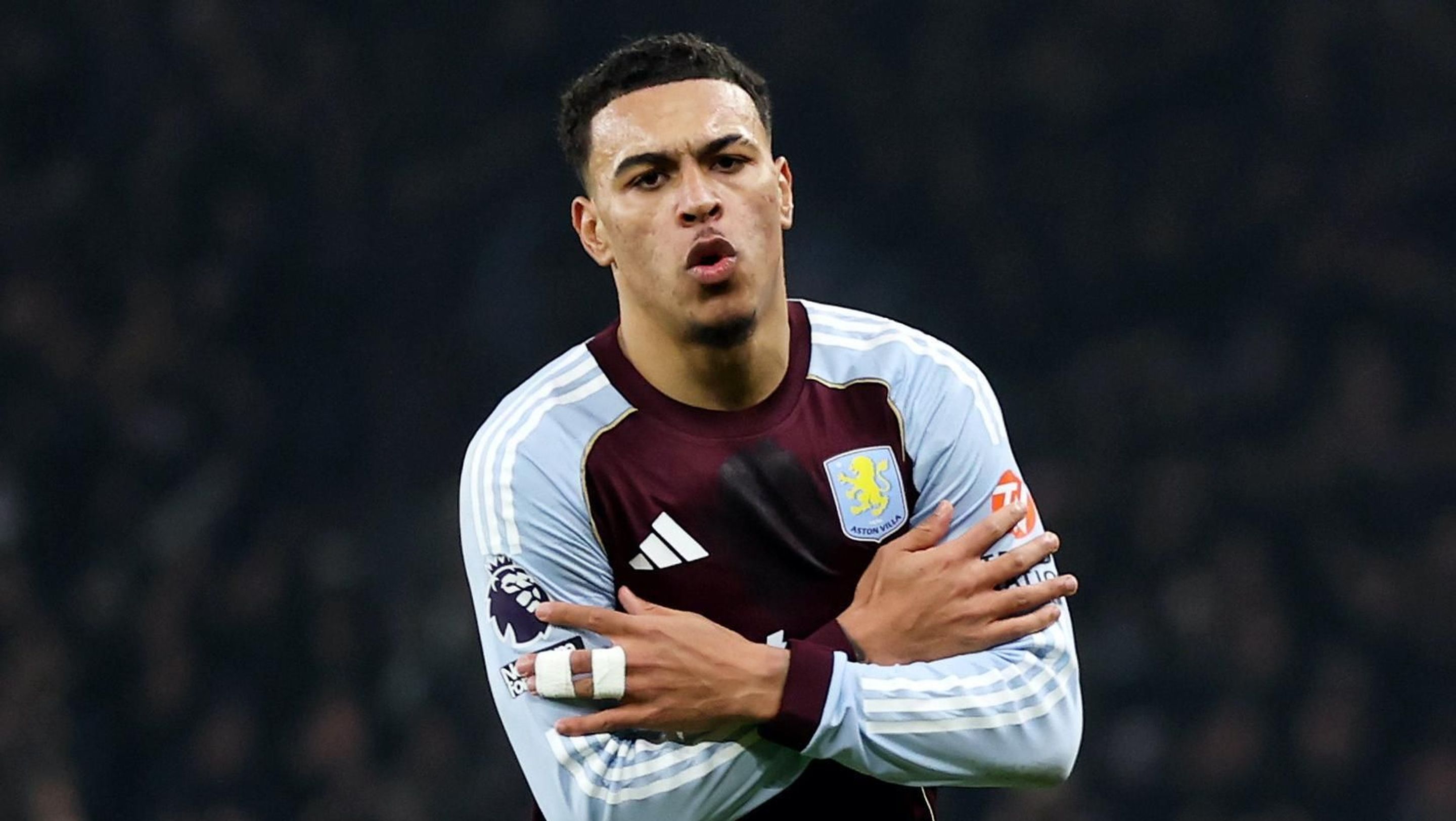
This is the question flooding my timeline. Morgan Rogers is currently in 25.4% of teams, classifying him as a "High Owned" asset. He is in scintillating form (6.7), having scored 7 goals this season. On the surface, he looks like the first name on the team sheet. But here is where the data tells a fascinating, conflicting story.
I took a deep dive into his profile, and the "expected" metrics are flashing red warning lights. Rogers has scored 7 goals from an Expected Goals (xG) total of just 3.03. In the world of data analytics, this is a massive overperformance. Usually, when a player scores more than double their xG, I advise an immediate "sell high" because regression to the mean is inevitable. He simply isn't getting the volume of high-quality chances to sustain this scoring rate long-term. His xGI per 90 is only 0.27—that is incredibly low for a midfielder priced at £7.4m.
However, FPL is about context. Before I hit the sell button, I checked the FPL Stats Lab Fixture Difficulty Planner. Aston Villa are about to enter a golden run: Nott'm Forest (H), Crystal Palace (A), and Everton (H). These are arguably the three best fixtures you could ask for.
So, here is the verdict: If you own him, you simply cannot sell a player in this form with those fixtures, even if the underlying stats are shaky. You ride the wave until the fixtures turn. But if you don't own him? I would be very hesitant to buy. You are buying at the absolute peak of his price and output, just as the data suggests he is due a dry spell. It’s a classic gambler's dilemma.
Should I Sell Phil Foden Before the Fixture Swing?
The Short Answer: Yes, this is a viable strategy; Foden's fixtures are turning "red" with Chelsea, Man Utd, and Liverpool on the horizon, making this the optimal window to pivot to a differential.
We discussed Foden regarding captaincy, but what about his long-term spot in your squad? At £9.0m, he takes up a significant chunk of the budget. While his total points (96) are impressive, we have to look forward, not backward. This is where the Fixture Difficulty Planner becomes your crystal ball.
Man City's upcoming run is brutal: Chelsea (H), Brighton (H), Man Utd (A), Wolves (H), Spurs (A), Liverpool (A). There is hardly a breather in that entire sequence. Conversely, we have alternative mid-premium assets entering much friendlier schedules.
If you are looking to break the template, selling Foden now—before his ownership drops and his price potentially falls—could be a season-defining move. It allows you to redistribute funds to a more consistent heavy hitter like Saka or perhaps spread the cash to upgrade a budget defender. It is a terrifying move to sell a player owned by 40% of the game, but data-driven managers know that points come from future fixtures, not past glory.
Where Can I Find the Best Differentials (<10% Ownership)?
The Short Answer: Pedro Neto (8.3% owned) presents an intriguing option; despite a tough next game, his underlying creative numbers are strong, though he remains a high-risk punt.
If you are chasing in your mini-leagues, you need players that your rivals don't have. I used the FPL Stats Lab Player Watchlist to scan for midfielders under 10% ownership who are posting respectable numbers. The algorithm highlighted Chelsea's Pedro Neto.
Neto is a true differential at just 8.3% ownership. Priced at £7.3m, he is in a similar bracket to Rogers but with a completely different statistical profile. While Rogers is a finisher running hot, Neto is a creator. His Expected Assists (xA) total is 3.86, which is actually higher than Foden's (3.07). His xGI per 90 stands at 0.43, which is significantly healthier than Rogers' 0.27.
The caveat here is the immediate fixture: Man City away. It is not a game you target. However, following that, he faces Fulham, Brentford, and Palace. If you are playing the long game and want a differential who creates genuine volume of chances, Neto is one to watch. You can filter for these low-owned gems yourself using the Player Watchlist to find the next player about to explode.
Data is your shield against the chaos. Use the FPL Stats Lab tools to double-check your gut feelings before the deadline passes.
Ready to Optimise Your Team?
Use our tools to get ahead of the competition.